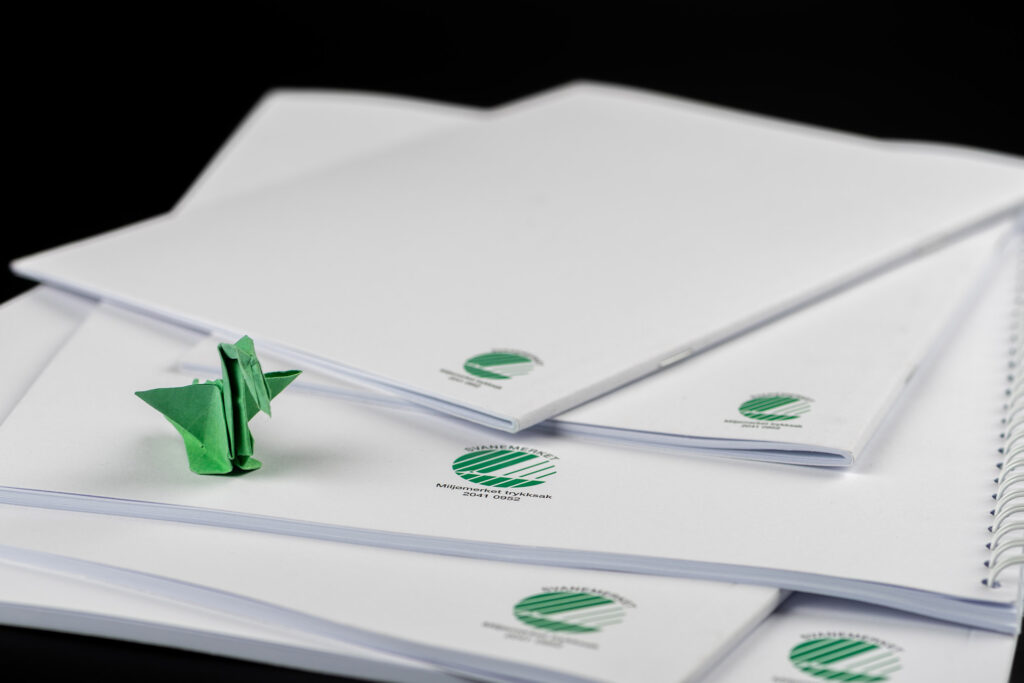
In the graphic industry, we often talk about «finishing». What do we actually mean by that, what finishing techniques exist, and why are these processes so important for making your printed material turn out just as you dream of? You'll find the answer here!
Some of the most important things that happen to printed matter are what takes place after the actual printing is finished. This final stage in the production process is known as finishing, and involves various techniques such as cutting, stapling, perforating, foil stamping or spiral binding. Finishing is crucial for the final product to turn out exactly as you want it – quite simply the icing on the cake that makes the printed matter look professional and appealing.
There are many different ways to finish and post-process a printed matter. Some you may have heard of, others not. Here is an overview of the most common methods.
Intersection
Trimming printed matter means cutting or cropping it down to its final size. This is an important part of the printing process and the step that ensures the finished printed matter is the correct size and looks as it should. Usually, there will be a small margin on the printed matter that is not meant to be printed on, called bleed or trimming, to ensure that the printed matter has no white edges after cutting.
Stance
Die-cutting is a technique where the printed matter is cut or shaped into a specific form or size. This can include creating holes, special shapes or contours. If you are looking for printed matter that stands out, it is worth checking out all the possibilities die-cutting offers! A die-cut cover can, for example, reveal parts of the content on the page behind, creating an eye-catching effect together.
Crimping and fluting
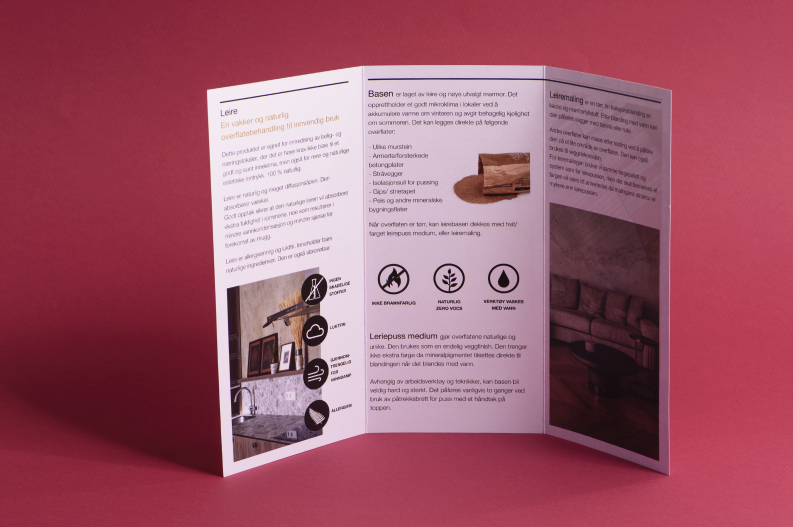
Folding is the industry word for creasing. A sheet can be folded in many ways to give the finished printed matter the desired effect. When a A4 sheet folded to four A5 pages this is called, for example, a single-fold leaflet. Leaflets come in many variants, such as concertina fold, open or closed gatefold, roll fold and parallel fold. If the paper is thick, there is a risk that the coloured print will crack during folding. We avoid this by mechanically breaking down the fibres in the paper pulp so that it is possible to fold the paper without the print cracking, known as rilling.
Perfect-bound books
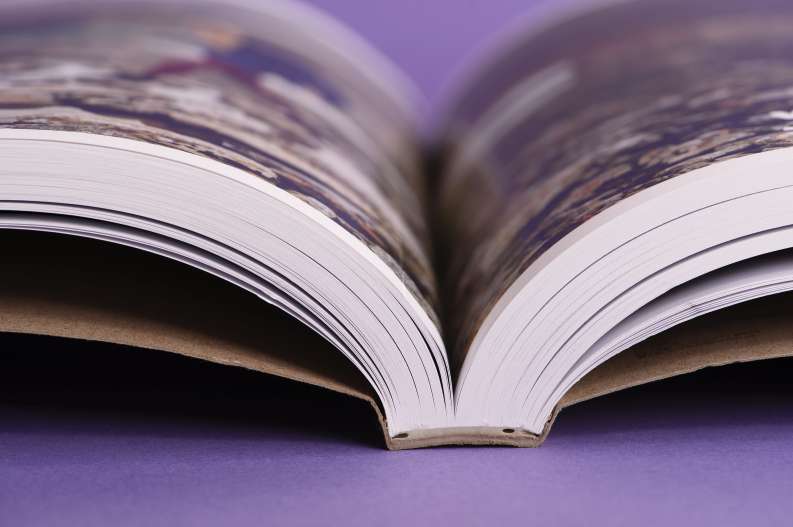
Perfect binding is the most common way to bind thicker magazines or softcover books. When perfect binding, adhesive is applied to the spine of the block, after which the cover is attached on the outside. While the inner pages are often of a lighter quality, the cover is printed on heavy paper or card. The result is a flat and straight spine – making the magazine or book easy to stack and look great on the bookshelf!
We have extensive experience in the production of spine-glued books and magazines – talk to us about your wishes and needs.
Wire binding
When binding many and/or thick sheets – such as a calendar – it can be wise to use a spiral spine. Spiralisation is a robust and durable binding method, perfect for printed materials that need to withstand some rough treatment. There are different types of spirals. The most common, wire-o, is clamped together around the pre-punched holes, while comb binding is a continuous spiral that goes all the way through the spine. Comb binding is often the best choice when the page count is high and the book is heavy.
Foiling
If you are looking for an exclusive yet durable finish for your printed matter, PP lamination is a great option. PP lamination is a thin plastic film applied to the paper that gives the surface a different texture from the original, such as matt, gloss or leather-like. In addition, PP film prevents the paper from cracking during creasing, perfect binding or other bookbinding, keeping the printed matter looking good for longer. PP film is available in a range of variants – the most common main categories are matt, gloss and effect film.
Are you wondering which finishing technique is best for your printed matter? Get in touch, then we'll find the expression that makes a difference!