One of the first things a customer notices about an item is the label. And an attractive and easily recognisable label often leads to sales. Therefore, the choice of label is absolutely crucial – and here are a few tips on what you should consider when choosing a label for your product.
Research shows that consumers spend very little time forming an opinion about a product when shopping. Therefore, it is essential to give potential customers a positive first impression through the packaging – and this is where the label plays an important role.
It is a long time since labels were primarily used to inform about the contents of the tin can. Now, the tags are increasingly used to profile and market products.
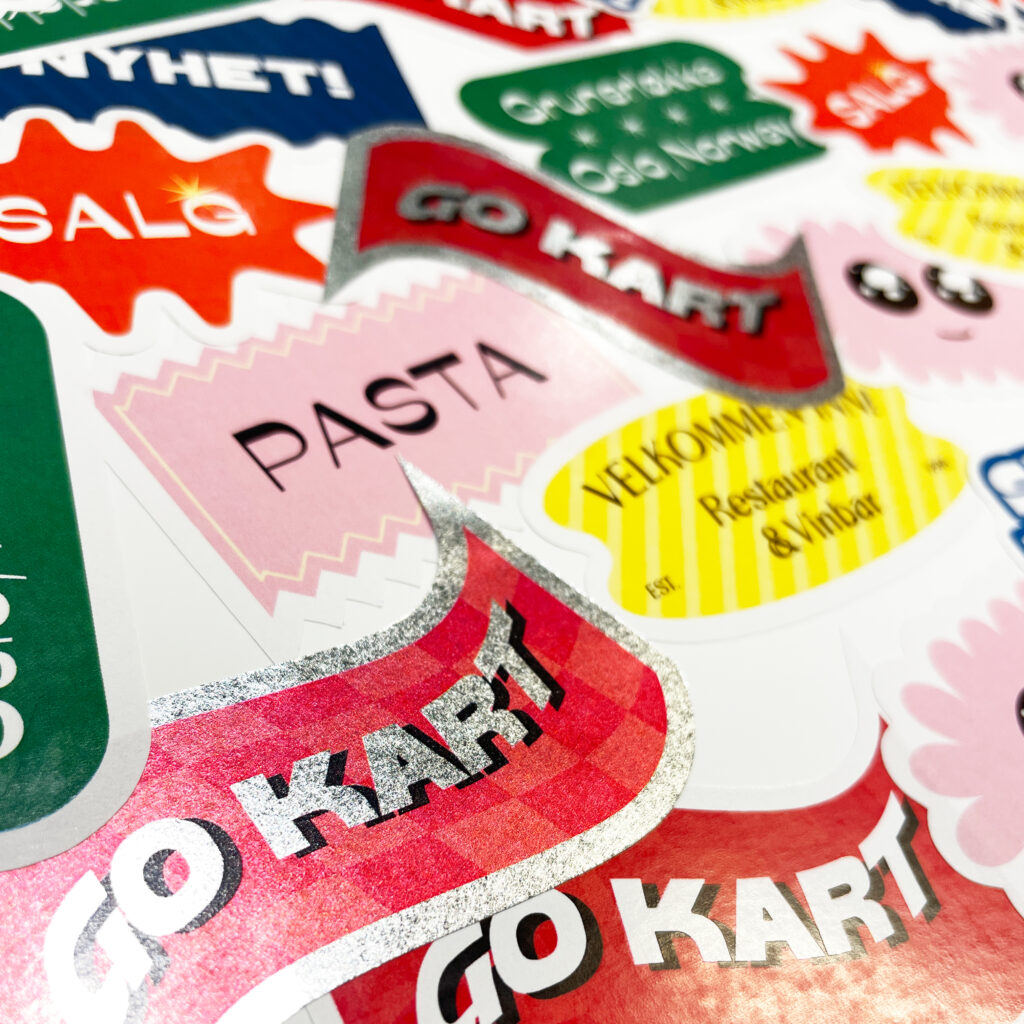
The label is a central part of the brand's visual identity, and a well-designed label helps your product stand out from the crowd and capture the attention of potential customers. For even though the label is often not very large in physical terms, it can be used to its full potential to convey values and history in a way that appeals to customers' emotions.
Do you need labels for small-scale production, bottles or packaging? In this guide, you will get useful information on what factors you should consider.
1. What do you want the label to communicate?
Before you start designing or choosing a label, you need to understand the purpose of the product and who your target audience is. Is the product a luxury gift that requires an elegant label, or is it a practical everyday product that needs a simple and informative label? Defining the purpose and target audience will help you determine the style, colours and tone for your label.
2. What material will the label be applied to?
Should the label be attached packaging in cardboard, plastic, glass, metal, paper or perhaps wood? It is important that it can be properly attached and looks good on the packaging, so here it is a matter of printing the labels on the material that is best suited in each case. Also consider the use – if it is a drinking bottle, for example, it might be smart to have a water-resistant label.
3. What is the expected lifespan of the label?
What will the label be exposed to during transport, storage and use? Factors such as temperature, humidity level and mechanical stress help to determine how long the label stays looking good. Sometimes you only need a temporary label, but if it needs to withstand some rough treatment, you should choose a material known for its durability – for example, vinyl or polyester.
4. Which design are you going for?
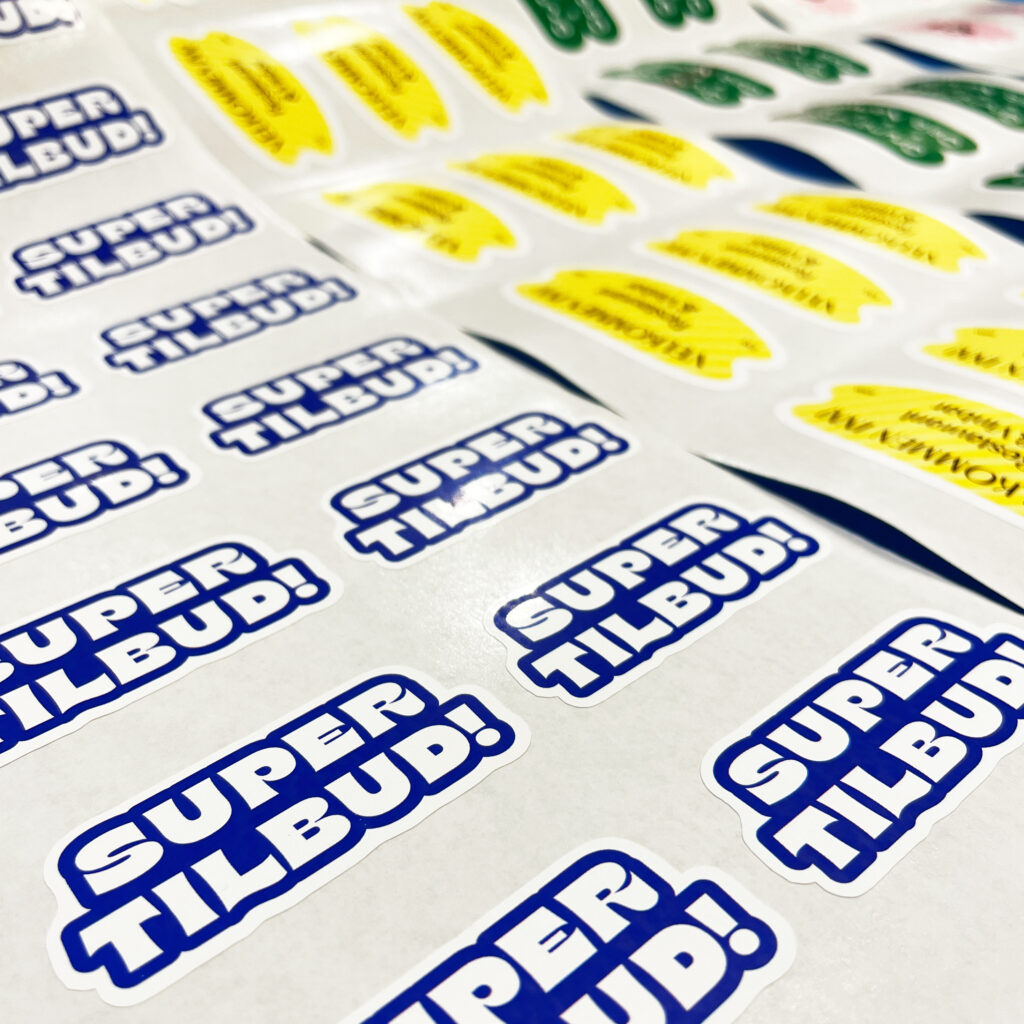
The label should reflect your brand and the identity of the product. Choose colours, shapes, fonts and graphics that are consistent with your brand. No one says that a label has to be round – feel free to experiment with unusual shapes or die-cuts to create a unique design. Also remember to include essential information such as the product name, logo, ingredients, instructions for use and any legal requirements.
5. When should the label be applied?
Should the label be affixed to the packaging before it is filled? If so, it is important that it can withstand shocks and temperature changes that may occur during the packaging process. If, on the other hand, the label is to be applied only after the package has been filled, it is important to ensure that the label adheres properly despite any dents or irregularities on the packaging.
We print labels on rolls – delivered the same day
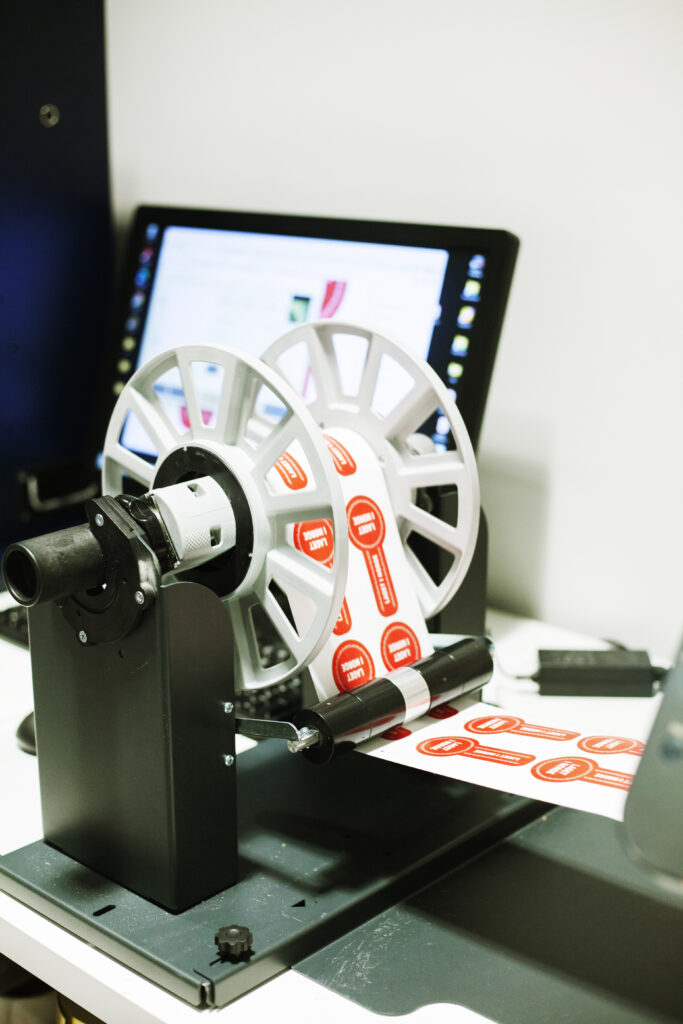
Here at CopyCat, you get high-quality labels that make your products attractive on shop shelves. We print on a wide range of media, including paper, plastic and textiles. And, of course, we deliver the labels fully die-cut on a roll – on the same day! Did we mention, by the way, that we can also design the labels for you?
Need help finding the right label? Just let us know get in touch!